“I really can’t remember not being interested in music,” he says. “Growing up, I just wanted to be like my parents and play an instrument too.”
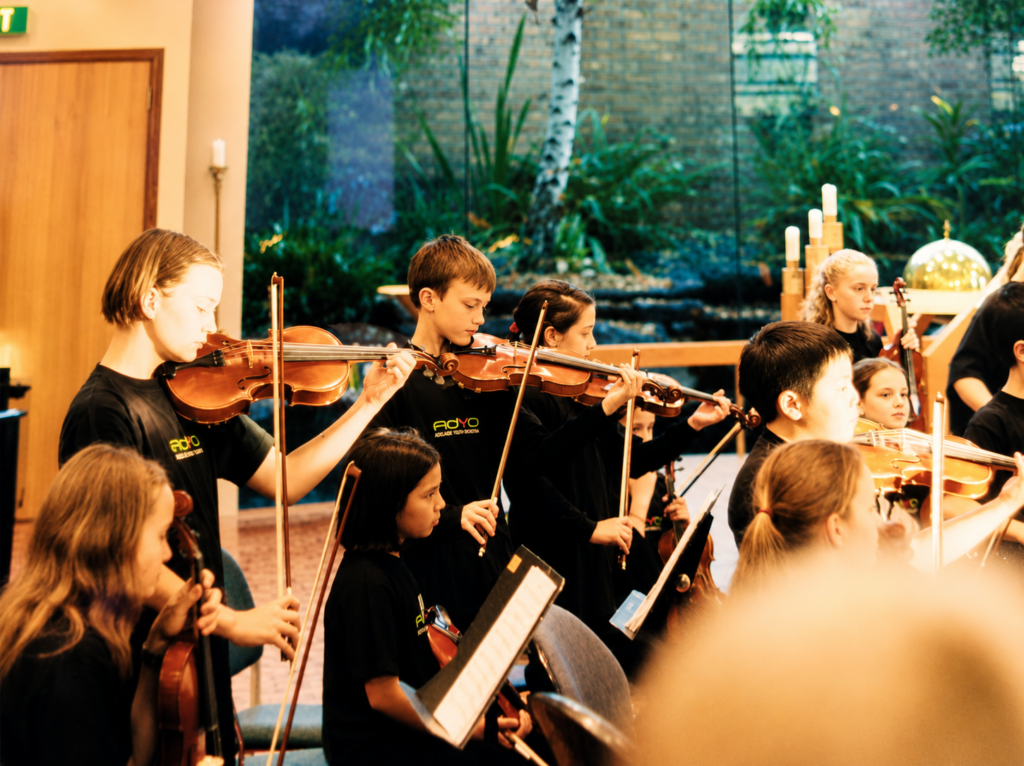
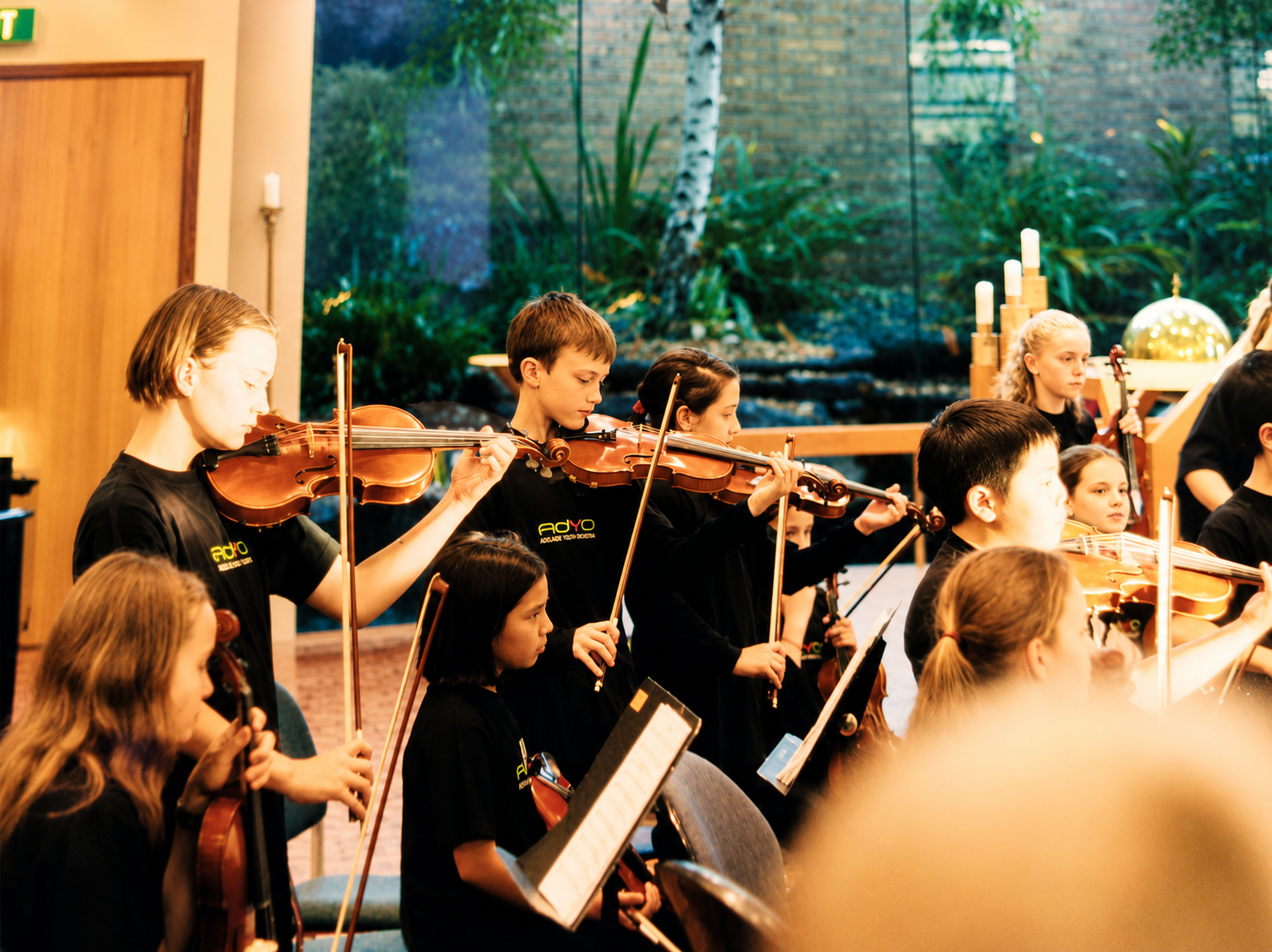
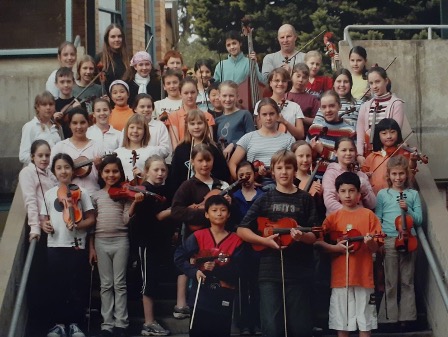
John began violin lessons at the age of five before joining Adelaide Youth Strings in 2004. Over the next decade he progressed through Adelaide Youth Strings, Adelaide Youth Sinfonia and eventually the Adelaide Youth Orchestra, first as a violinist before making the switch to viola.
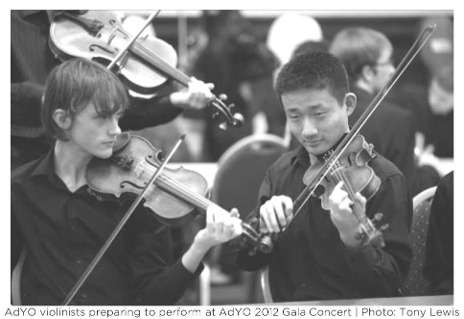
“It wasn’t really planned,” he laughs. “Around 2010 I picked up viola because there was demand for it in school groups. I auditioned for AdYO on viola and ended up staying in the viola section for the rest of my time.”
Looking back, John believes joining Adelaide Youth Strings was a turning point in his musical development.
“I think I only really started to get good once I joined AYS and realised what it was like to play in a big group,” he says.
“Being surrounded by people my own age who were fantastic musicians gave me something to aspire to.
Like many young musicians, his interests didn’t stop with one instrument.
Alongside violin and viola, John also learnt piano and later took up the French horn.
“French horn especially was a great experience,” he says. “Brass instruments were like a whole new world to me.”
Today, music remains an important part of his life. Alongside occasional performances with local ensembles, John plays viola with the Flinders University Chamber Ensemble and violin with the wonderfully named pirate rock band, Captain Hellfire and the Wretched Brethren.
But professionally, his path led somewhere very different.
After studying biotechnology, John completed a PhD in bioinformatics at Flinders University and now works as a bioinformatician with the South Australian Genomics Centre at SAHMRI.
Although music and genomics might seem worlds apart, John believes the skills developed through orchestral playing continue to influence the way he approaches his work.
“I’ve learned to almost enjoy that feeling of anxiety before a performance,” he says. “That carries over into things in my professional life like giving presentations.”
The experience of making music together also shaped his outlook in ways he didn’t fully appreciate at the time.

“I think there’s something to be said about the mental benefits of working together with groups of talented people to create something beautiful,” he reflects.
“It changes your outlook on what people are capable of.”
For someone who describes himself as a shy child, the friendships formed through Adelaide Youth Orchestras became just as important as the music itself.
“Being around people my age who were really great musicians and just fun to be around was probably the most valuable thing,” he says.
“I made good friends and connections through AdYO that I never would have otherwise.”
Of course, not every lasting memory happened on stage.
One of John’s favourites comes from an Adelaide Youth Strings camp at Woodhouse Adventure Park.
“They had this rope river crossing,” he recalls. “A few of us attempted it, failed miserably, and fell straight into the river.”
“It was a cold, windy day and I remember squelching back to the accommodation feeling the absolute coldest I’ve ever felt.”
“Very good times.”
Those experiences helped prepare John for opportunities beyond AdYO, including gaining entry into the Special Interest Music Centre at Marryatville High School.
“I doubt I would have been capable of auditioning successfully without the musical skills and experience I gained through AdYO,” he says.

In a fitting twist, John now holds a bioinformatics fellowship supported by the James & Diana Ramsay Foundation, one of Adelaide Youth Orchestras’ longstanding philanthropic partners.
While the connection is entirely coincidental, he sees similarities between the disciplines that have shaped his life.
“I do think there’s something to be said for my musical upbringing preparing me for the analytical scientific work I do now,” he says.
“Music is a very mathematical endeavour at the end of the day.”
John’s story is a reminder that the impact of Adelaide Youth Orchestras reaches far beyond the concert hall. Sometimes the greatest legacy of a youth orchestra isn’t simply the musicians it develops, but the confidence, friendships and ways of thinking that stay with people for life.